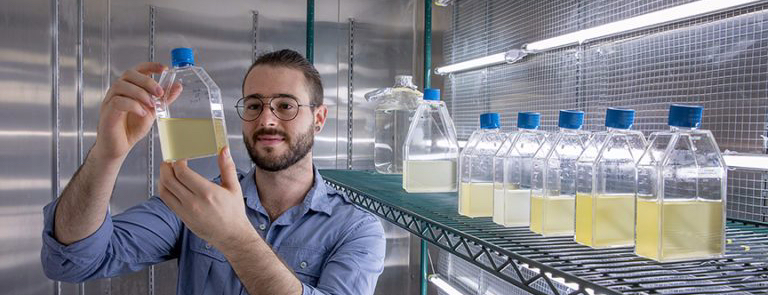
Jeremy Schreier, a doctoral student in the Department of Marine Sciences, studies microbial communities in the sunlit (euphotic) zone of the ocean environment. These microbial ecosystems contain diverse organisms connected by the exchange of metabolites (substances formed in or necessary for metabolism). Read more at the UGA web page…
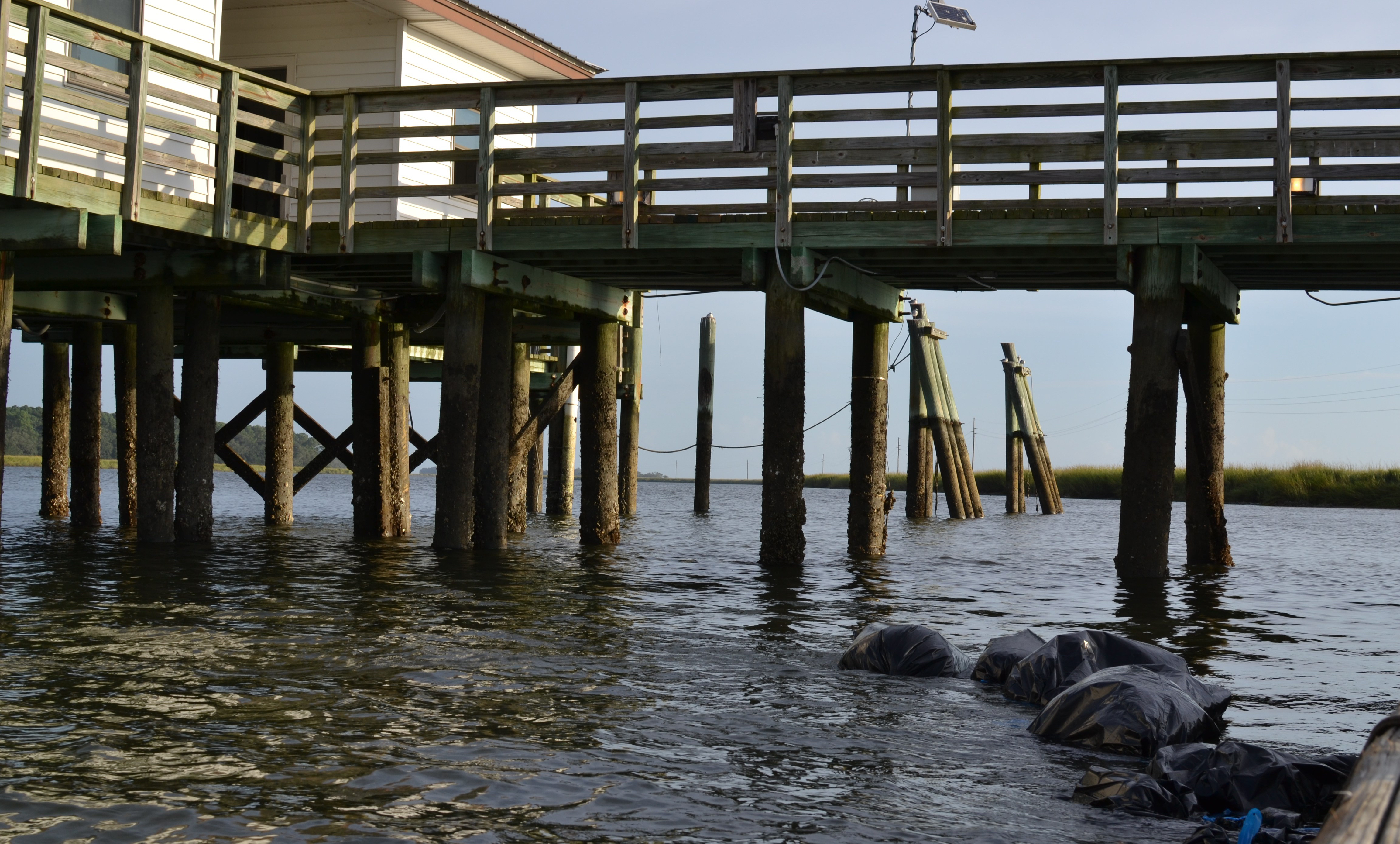
Understanding which compounds comprising the complex and dynamic marine dissolved organic matter (DOM) pool are important in supporting heterotrophic bacterial production remains a major challenge. We eliminated sources of labile phytoplankton products, advected terrestrial material, and photodegradation products to coastal microbial communitiesby enclosing water samples in situ for 24 h in the dark. Bacterial genes for which expression decreased between the beginning and end of the incubationand chemical formulae that were depleted over this same time frame were usedas indicators of bioavailable compounds, an approach that avoids augmenting or modifying the natural DOM pool. Transport- and metabolism-related genes whose relative expression decreased implicated osmolytes, carboxylic acids, fatty acids, sugars, and organic sulfur compoundsas candidate bioreactive molecules. FT-ICR MS analysis of depleted molecular formulae implicated functional groups ~30-40 Da in size cleaved from semi-polar components of DOM as bioreactive components. Both gene expression and FT-ICR MS analyses indicated higher lability of compounds with sulfur and nitrogen heteroatoms. Untargeted methodologies able to integrate biological and chemical perspectives can be effective strategies for characterizing the labile microbial metabolites participating in carbon flux.
 Moran Lab